Evidence-Based care

Grounded in research.

Born from Real Anxiety

Experience meets science.

Complete Transparency

Clear, honest guidance. 

Free shipping over £25

£3 on orders below £25

IS YOUR DOG AN ANXIOUS TRAVELLER?

On any journey, the carrier your pet is travelling in can make every noise worse, making it harder for them to relax. And if your pet is anxious, you might be too. 

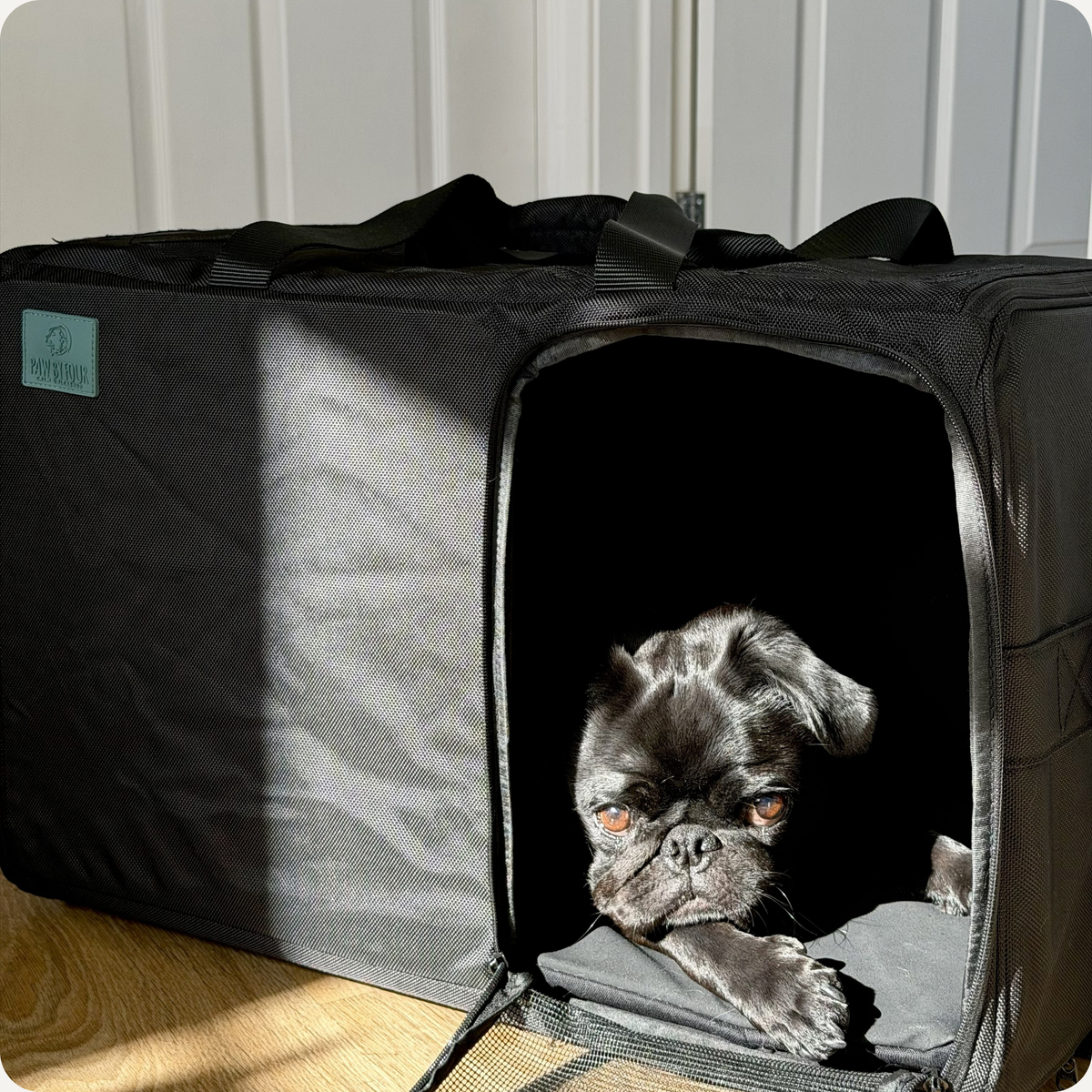
Inspired by the way soil naturally absorbs sound, as it does in a fox den, KalmDen is designed using calculated acoustic engineering to help provide an acoustically calmer travelling space for your pet.


Shop KALMDEN

Our Paths to Calm

Explore our Offerings

From sound-absorbing travel carriers, to calming lick mats and dog-safe nut butters. Everything your anxious dog needs in one place.

KalmDen

Acoustic calm, designed to provide a calmer journey for your anxious pet.

Lick Mats & Enrichment

Slow licking, steady calming, simple enrichment supporting your anxious dog.

Nut Butters for Dogs

Made just for dogs, perfect for lick mats, treats and training.

Our Solution

From Anxiety to Action to Calm

When Anxiety Disrupts Their World

Every anxious moment your dog experiences, you feel it too.
You've tried everything but nothing seems to work.

Understanding Anxiety

There is a Way Forward

Everything you need to help your anxious dog.
Evidence-based products and proven strategies to help your dog feel safe again.

Find What Works
Our story

The heart behind Paw By Four

Every anxious dog deserves an owner who refuses to give up. And every anxious owner deserves solutions that actually work. That's why Paw by Four exists and these four principles guide every decision we make.

Empathy

We understand the fear, guilt, and worry because we've lived it too.

Education

Clear, research-backed guidance without miracle claims or confusing advice.

Transparency

We cite our sources, explain our choices, and stay honest about what we know.

Guidance

We help you find the right support, whether it's a product, trainer, or vet.

More About Us
Trusted by pet parents

Real stories. Calmer dogs.

See how Paw by Four's calming products are helping real dogs and their owners feel more confident every day.

Jade n

An essential part of mine and Bruno’s daily routine The Steady Eddie lick mat has been so helpful for Bruno and myself. It’s now a huge part of our daily routine for whenever he’s feeling anxious, such as me leaving the house. I’ve noticed a difference in how relaxed he stays throughout the day, even during stressful situations. It brings so much calm to our home!

Wendy W

My dog absolutely loves this peanut butter! The moment I take the jar out, his tail starts wagging with excitement. The texture is perfect for spreading on lick mats, stuffing into toys, or using as a training reward.

Megan EW

I purchased the Paw by Four Smooth Peanut Butter for dogs for my dog, Rocky, and I couldn't be happier with it.  He absolutely loves the taste and gets so excited when I get the jar out.

Wendy W

Excellent product — my dogs love them and the best is that this has really reduced anxiety when I have to leave them at home for a bit. The suction cups are very helpful for enabling the pad to be fixed on tiles or windows.

jade n

100% peanuts and no nasties! Finding a safe peanut butter for dogs can be scary with potential hidden ingredients, but I love this one for Bruno because it doesn’t contain any xylitol. It's literally just peanuts with no nasties in it at all. It’s become a big part of his daily routine spread onto the Paw by Four lick mats. Bruno is obsessed with the taste and I get peace of mind knowing it’s just peanuts.

Herman s

Very helpful and interesting material.

calm unleashed, in real homes

Products in Action

Real dogs, real routines, and real moments showing how Paw by Four products support calmer everyday experiences.

find the right nut butter for your dog

everything you need to know before you choose

Compare the ingredients, nutrition and best uses of each nut butter and pick the one that suits your dog.

peanut butter

Ingredients: 100% Peanuts

Use: The everyday option.

How often: Daily within your dog's treat allowance.

Flavour & Texture: Smooth, rich and creamy.

Best for: Lick mats, puzzle feeders, hiding medication, your every day go to.

cashew butter

Ingredients: 100% Cashews

Use: For special occasions.

How often: No more than 2 to 3 times a week.

Flavour & Texture: Milder and naturally sweeter.

Best for: Lick mats, picky eaters, special occasions, hiding medication.

MADE TO SHARE

RECIPES YOU CAN BOTH ENJOY

Fruit spreads made with dog-safe ingredients and our single-ingredient nut butters. Make a batch, keep some for your toast and spread the rest on your dog's lick mat, then enjoy the same treat side by side.

banana, sweet potato & peanut butter mash

Soft sweet potato and ripe banana mashed with peanut butter.  Thick, glossy and comforting and it holds well in the grooves of a lick mat.

Traditional apple & blackberry with cashew butter

A classic with a twist, made for two. Soft apples and blackberries cooked down to a preserve, with cashew butter stirred through.

mango surprise spread with cashew butter

Sweet mango and apple with a creamy cashew butter finish. A spoonful for you and lick mat spread for them.

Common questions

Everything you need to know

You are not overreacting. The fact that you are asking the question at all usually means something has caught your attention — a change in behaviour, a response that feels disproportionate, a level of distress that does not match the situation. 

Anxiety in dogs is not always dramatic. It does not always look like barking, destruction, or visible panic. It can be as quiet as a dog who rarely settles, who follows you from room to room, who startles easily, or who seems to shut down in new environments. The physical signals — yawning, lip licking, whale eye, a tucked tail — are easy to miss if you do not know what you are looking for.

The honest answer is that distinguishing anxiety from normal canine behaviour, from boredom, from a medical issue, or from a personality trait takes a little knowledge. That is exactly what our free guide is designed to help with.

They are related, but they are not the same thing and understanding the difference helps you respond more accurately to what your dog is experiencing.

Fear is a response to something present and specific. A dog who flattens when a truck passes is experiencing fear. The trigger is real, immediate, and identifiable. When the truck is gone, the fear typically subsides.

Stress is a physiological state, it's the body's response to pressure or demand. It can be triggered by fear, but also by physical discomfort, uncertainty, overstimulation, or even excitement. Stress is not always negative, but chronic stress, the kind that never fully resolves, causes real harm over time.

Anxiety is anticipatory. It is distress in the absence of a current threat, a dog who becomes unsettled before you have even picked up your keys, or who cannot relax in a new environment even when nothing is wrong. Anxiety is about what might happen, not what is happening. The difference is important, because it changes both how you understand your dog's behaviour and how you approach helping them

Honestly: weeks to months, depending on the severity of the anxiety, the consistency of the approach and the individual dog. There is no shortcut, and any product or programme that promises rapid transformation is worth approaching with scepticism.

What you may notice relatively quickly — within days to a couple of weeks — is a reduction in the frequency or intensity of individual episodes when a calming tool or environmental change is introduced. That is a real signal. It does not mean the anxiety is resolved, but it means something is shifting.

Deeper change — a lower baseline arousal, reduced reactivity to established triggers, an increased ability to settle — typically takes longer. Three months of consistent effort is a reasonable minimum expectation for meaningful behavioural change in a moderately anxious dog.

The most important thing to track is the change.  A dog who is recovering a little faster after a stressful event, or reacting to slightly fewer triggers than before, is improving even if the improvement is not yet visible in the moments that matter most.

It may be but shutdown is worth understanding as its own thing rather than immediately labelling it as anxiety. A newly rehomed dog who is still, quiet, unresponsive, or disinterested in food, play, or interaction is often not showing anxiety in the active sense. They are showing overwhelm. The nervous system has reached its limit and is protecting itself by switching off.

This is a normal and temporary stress response in many rescue dogs, particularly in the first days and weeks in a new home. The three-week adjustment period you may have heard about is real: the first week is often survival mode, the second week is cautious exploration, and the third week is the beginning of genuine settling. However, some dogs take longer.

The right response to shutdown is space, predictability and patience. Resist the urge to introduce your dog to everyone, take them everywhere, or actively try to bring them out of themselves. Let them set the pace. Provide a safe, quiet space they can retreat to. Keep the environment calm and the routine consistent.

If shutdown persists beyond four to six weeks without any signs of emerging confidence, or if it tips into visible distress — trembling, refusing to eat, inability to settle at all — then it is worth a conversation with your vet.

It is a fair question, and we would rather answer it honestly than dodge it because we sell lick mats.

The evidence for repetitive licking as a calming mechanism is genuine. Licking activates the parasympathetic nervous system, that's the part responsible for rest and recovery, and has been associated with reduced cortisol levels in dogs. The slow, rhythmic nature of licking a textured surface also provides sensory engagement that redirects a dog's attention away from a trigger and toward something manageable. That is not a marketing claim; it is a well-established aspect of canine behaviour science.

What lick mats are not is a cure. They are a tool and are most effective as part of a wider approach to anxiety management, particularly in the moments before or during a known stressor: a car journey, a grooming appointment, the period just before you leave the house. Used consistently and in the right context, they earn their place. Used as a standalone fix for severe anxiety, they will disappoint.